
Stop managing work.
Start operating systems.
Geniuzs is not a tool you use. It's an environment you operate inside.
Cognitive load, coordination, memory, and decision logic relocate from humans into architecture. Developers don't manage—they build. The system carries everything else. It replaces fragmented tools with one structured environment where work, context, and progress live together.
From problem to solution
See how Flow Architecture and Microdata solve fundamental development problems
Context Evaporates
"Why am I re-explaining this?"
Engineers reconstruct context constantly. Every handoff, interruption, and context switch multiplies this cognitive cost. Knowledge lives in people's heads, then disappears.
Everything Fragments
"Where did we discuss this?"
Chat in Slack, tasks in Jira, code in GitHub, docs in Confluence, decisions in email threads. Context scatters across five tools. Nothing connects.
Coordination Crushes
"Can someone update the team?"
Process lives in everyone's head. Every handoff demands explanation. Teams coordinate through messages, not structure. Work becomes managing work.
Adding more dashboards, AI copilots, or chat integrations doesn't fix this.
It's structural. The solution requires relocating responsibility from humans to architecture.
AI-powered development environment
CADIS operates on structured microdata. Generate pages, modules, actions through conversation. Preview before committing. AI becomes your development partner.
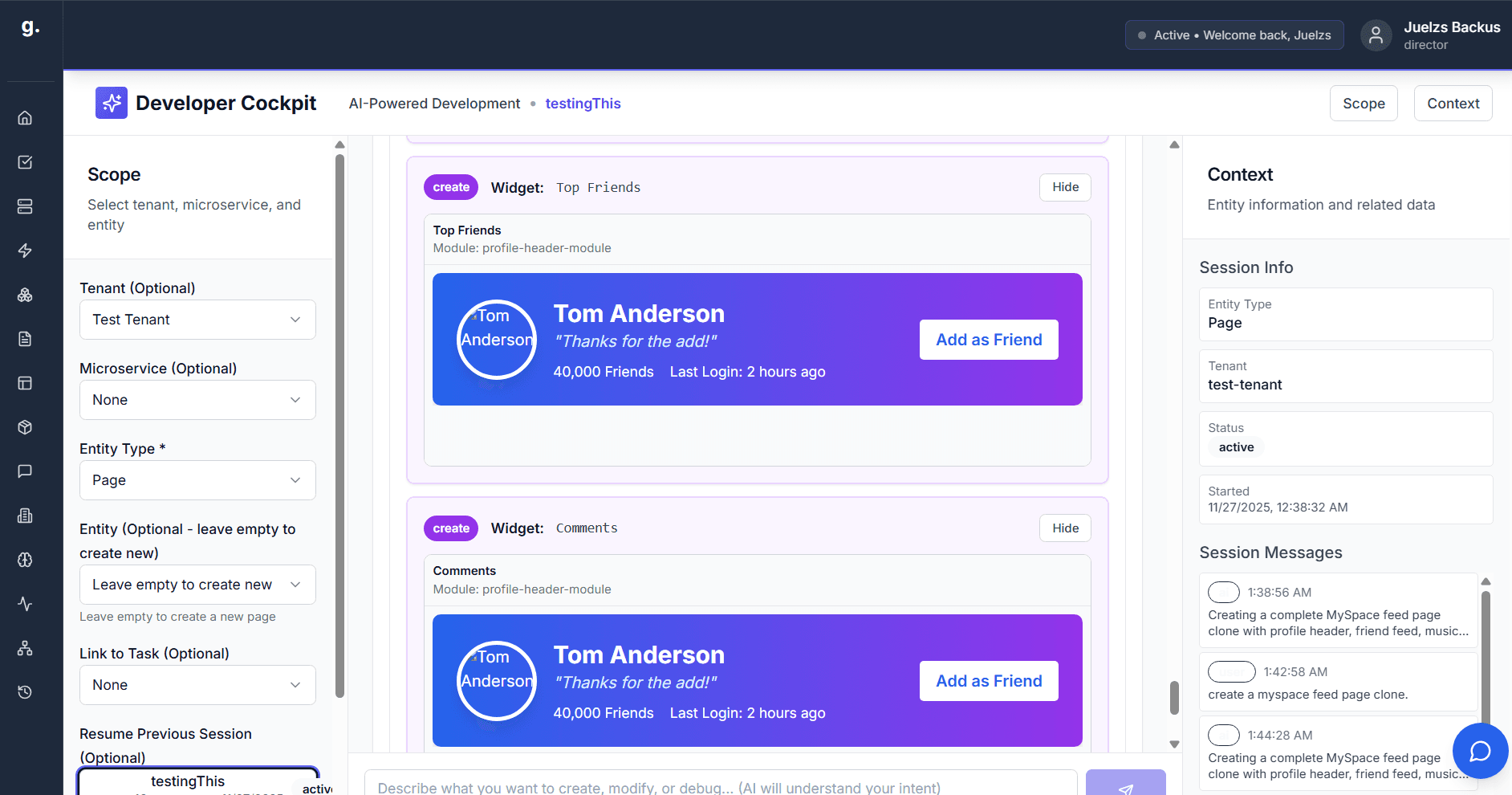
Conversational Development
Describe what you want to build. Claude generates structured entities with proper relationships and governance.
Live Preview
See changes instantly before committing. Test pages, modules, and actions in a safe sandbox environment.
Microdata Generation
AI understands your entity hierarchy. Generates pages, widgets, modules, and actions as structured database entities.
Interactive system visualization
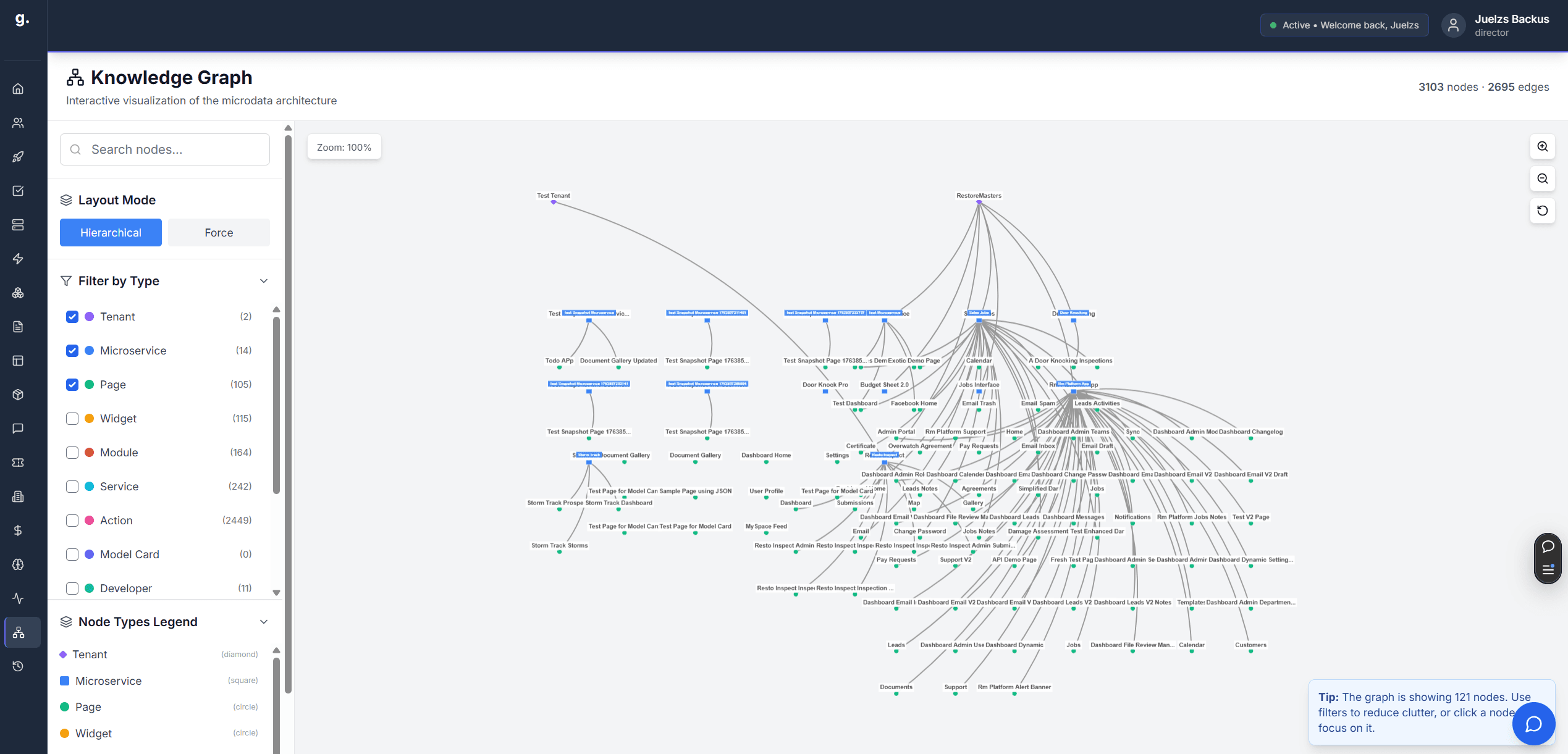
See your entire ecosystem as an interactive graph. Services, actions, pages, widgets, modules— all relationships visualized. Navigate complexity through structure.
Context-bound collaboration
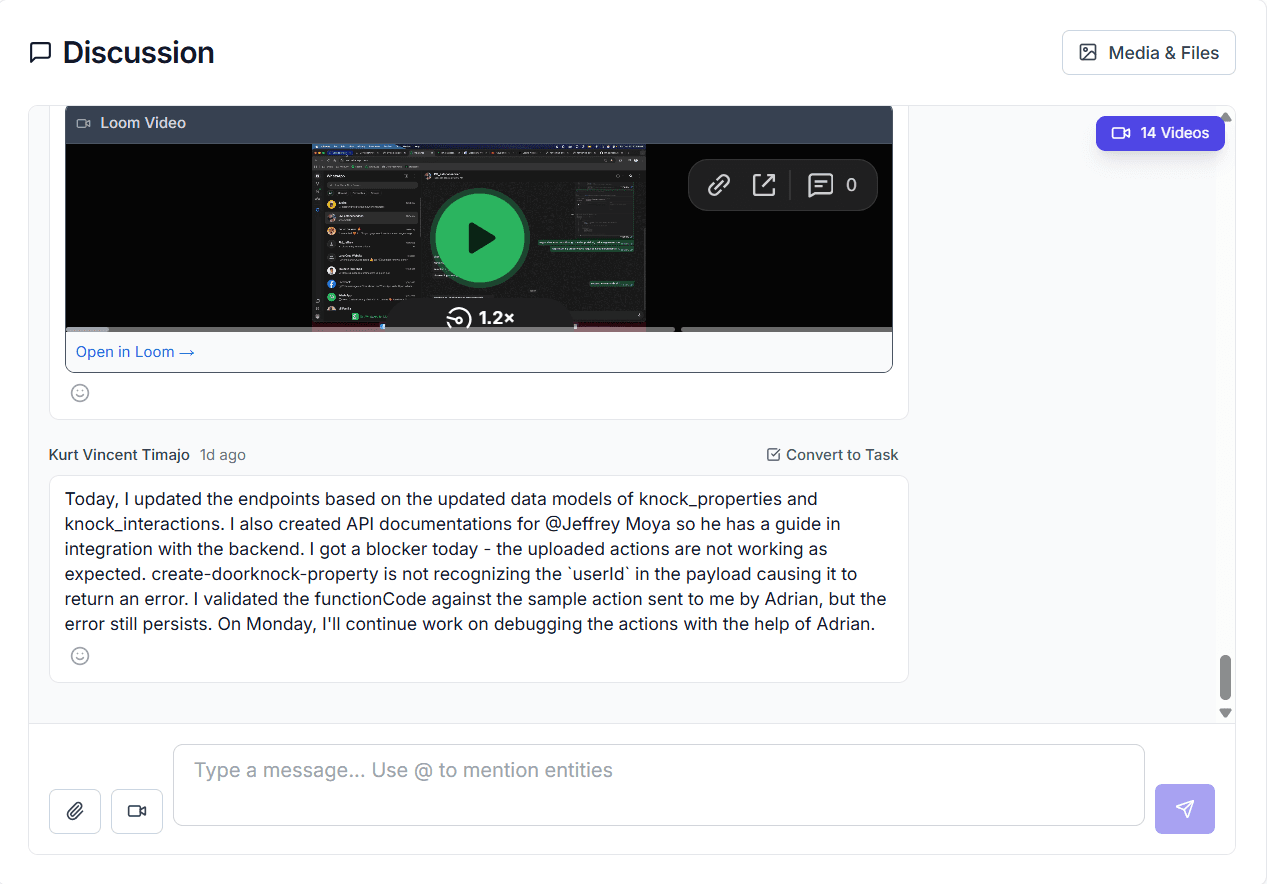
Discussions attach directly to entities. Every conversation, decision, and file stays with the work— never scattered, never lost. Context flows automatically as you move between tasks.
Entity-Bound
Every discussion attaches to pages, modules, actions, or tasks. Switch context, everything flows with you.
Persistent History
Decisions made six months ago? Still attached. Handoffs require no explanation. Context never evaporates.
No Reconstruction
Pick up any task. Full context loads instantly. No "What was this about?" moments.
Core systems. Not features.
These aren't add-ons or modules. They're integrated subsystems of the operating system— necessary, permanent, and working together.
These subsystems compose into a coherent whole. Mob Rooms link to entities. Capability Graph tracks your work. Draft Layer feeds Living Portfolio. The OS is one integrated environment, not scattered tools.
Structural visibility, not dashboards
Multi-tenancy isn't a feature. It's architectural. Each role sees exactly what they should— through structure, not configuration.
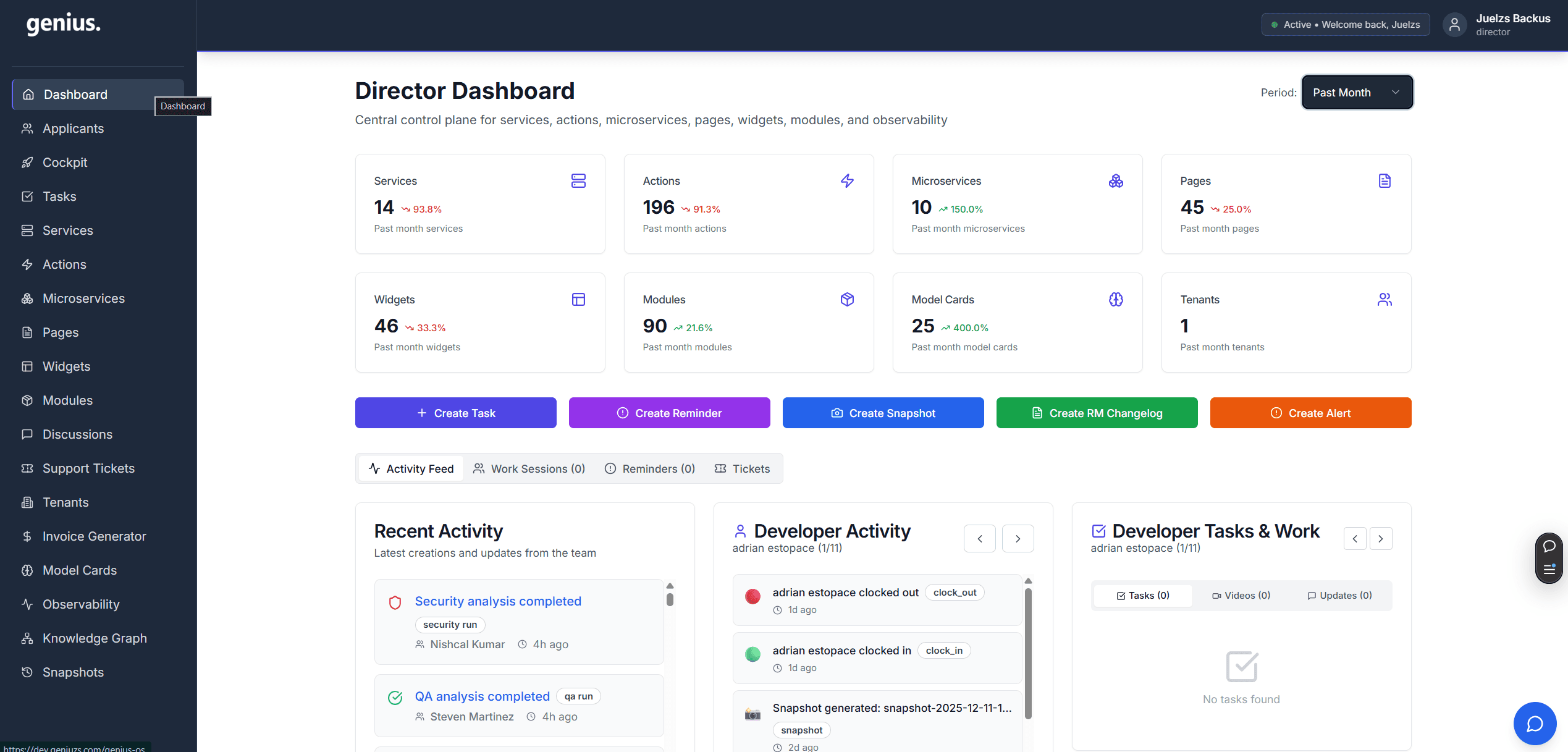
See everything. All tasks across all tenants. Full system visibility.
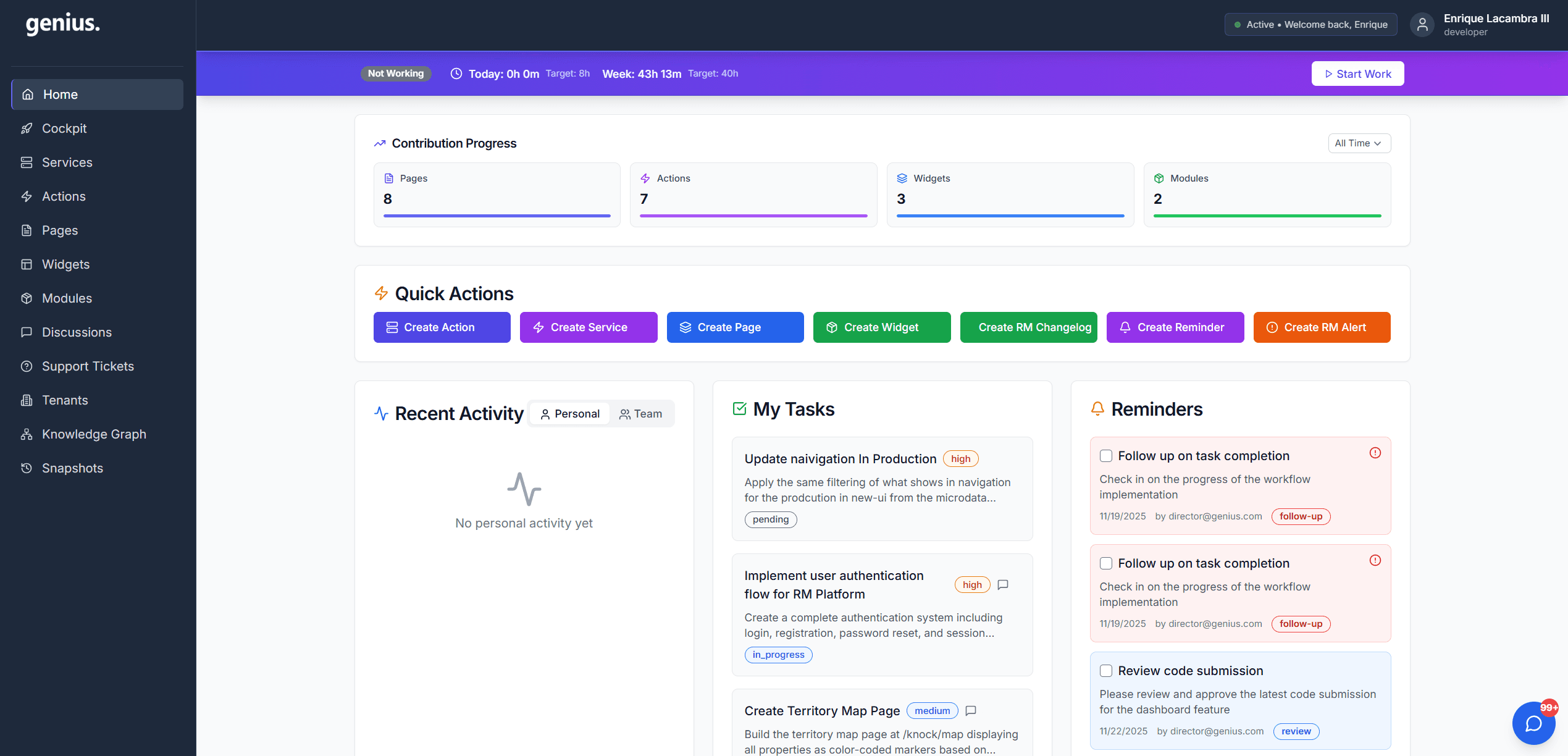
See exactly what's relevant. Tasks scoped automatically.
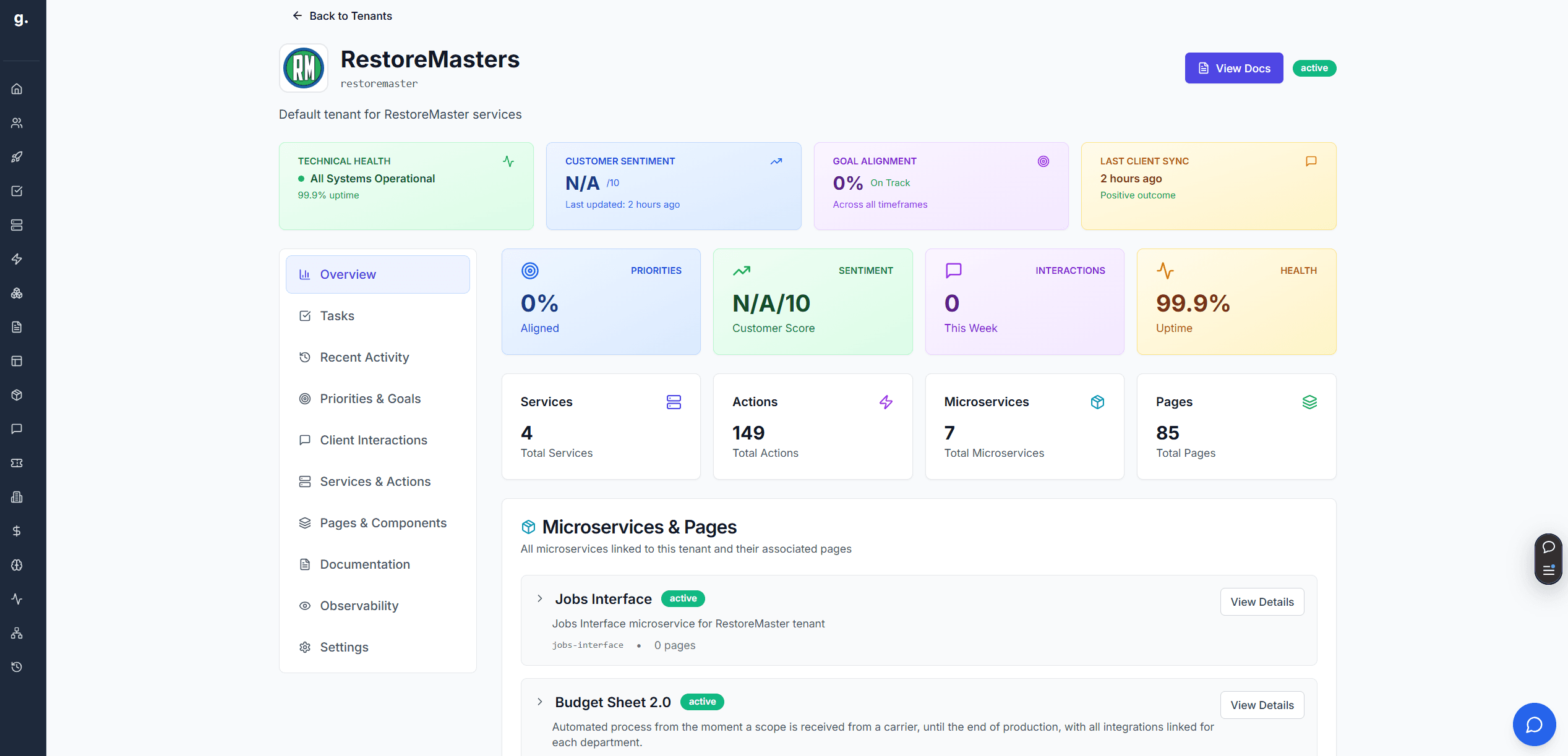
Individual tenant workspace. Collaborate on your projects directly.
Collaborate directly on their work. See tasks, participate in discussions, track progress. No waiting for status emails. Real-time transparency.
See exactly what's relevant to their assigned work. Tasks, entities, context—scoped automatically. No noise. No irrelevant information.
See everything. All tasks across all tenants. All developer contributions. Full system visibility. Manage multiple teams on multiple projects.
This isn't role-based access control bolted on. It's architectural visibility— embedded in entity relationships, scoped by tenant boundaries, enforced by structure. Each role experiences a different reality of the same system.
RestoreMasters—an Inc 500 nationwide company—operates entirely on Geniuzs
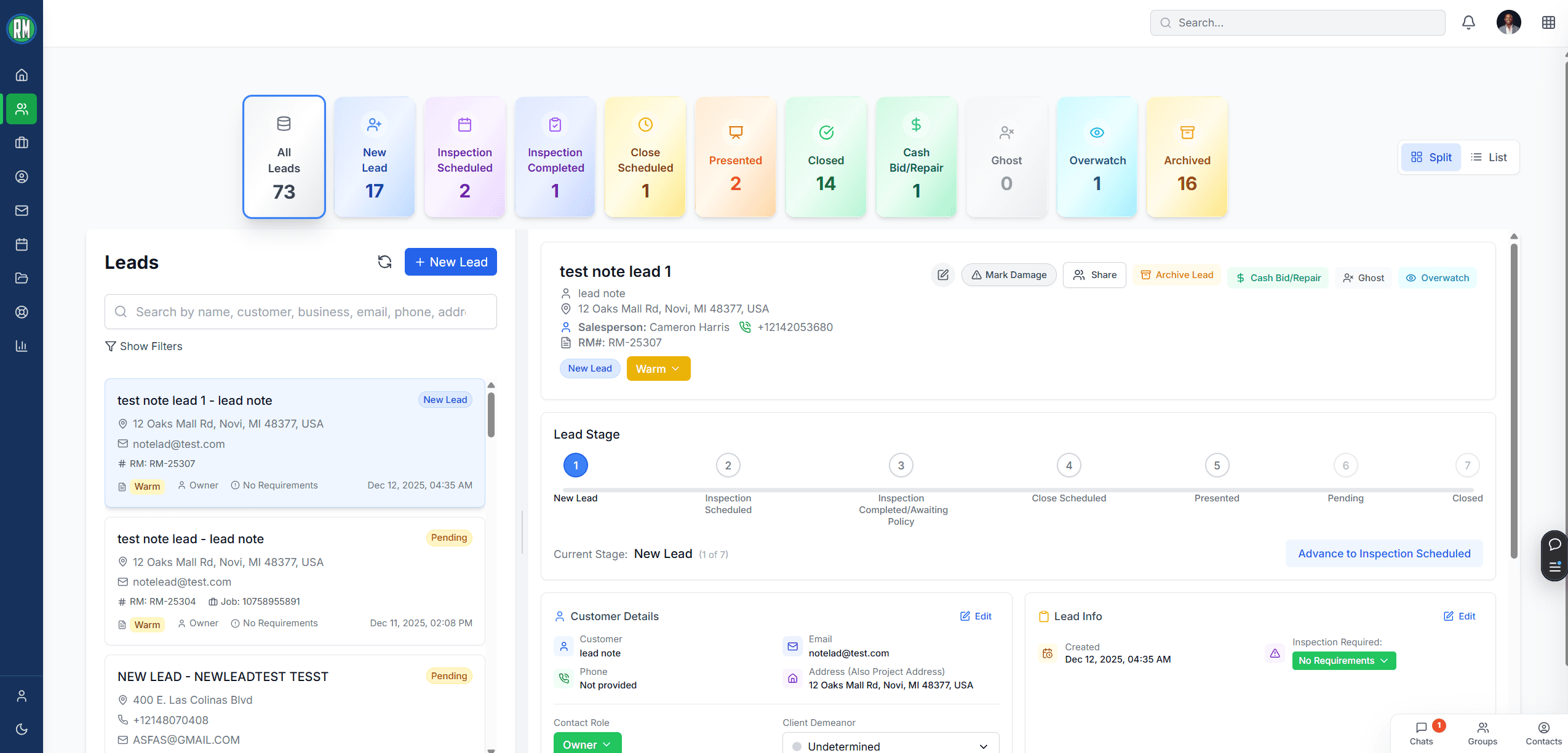
RestoreMasters—an Inc 500 nationwide roofing and restoration company managing real projects, real teams, and real revenue—runs entirely on Geniuzs.
When RestoreMasters needs a new feature, it's created in the database via Developer Cockpit. Minutes later, it's live. No deployment cycle. The system just knows.
For operators of complexity
Built for teams managing complexity across multiple projects, tenants, and developers.
Transparency With Control
Structural transparency doesn't mean surveillance. You control what becomes visible:
The system tracks completed work (pages, modules, actions) for accountability. But your thinking process, exploration, and private notes stay private until you choose otherwise. Transparency without surveillance.
This is for you if:
This is not for you if:
Geniuzs is for teams who need collaboration with tenants, transparency across developers, and governance over AI-generated code. If you're managing real complexity, this was built for you.
One foundation. Multiple expressions.
Geniuzs is the core. Everything built on it inherits Flow Architecture and Microdata principles.
The developer operating system. Flow Architecture + Microdata Architecture. AI integration, multi-tenant isolation, structural visibility. Everything else builds on this.
Inc 500 nationwide roofing and restoration company. Validates Geniuzs in production with real business operations, teams across multiple countries, and actual revenue. 50+ pages, 200+ widgets, 100+ modules—all database-driven.
Multi-tenant SaaS platform powered by Geniuzs. Isolated workspaces, metadata-driven configuration. Platform of Platforms architecture.
Flow Architecture is a defined methodology by Geniuzs. Microdata Architecture is the technical implementation. The ecosystem expands as new expressions emerge—marketplaces, templates, vertical-specific systems— all operating on the same foundation.
Enter the operating system
Geniuzs is operational. We're working with teams who understand the shift and want to operate inside architecture-first development.